Why Every Business Should Pay Closer Attention to Commercial Water Quality

Water is one of those things most businesses rarely think about until something goes wrong. It flows through pipes, fills equipment, cleans surfaces, and keeps daily operations moving without asking for much attention. But behind that simplicity is a reality many business owners eventually discover: the quality of water has a direct impact on efficiency, operating costs, customer satisfaction, and even the lifespan of expensive equipment.
Whether it’s a restaurant serving hundreds of meals a day, a manufacturing plant relying on precision machinery, or a hotel welcoming guests around the clock, water quality quietly influences almost every aspect of daily business. It’s easy to overlook because problems don’t always appear overnight. More often, they build gradually—mineral deposits, corrosion, unpleasant odors, reduced equipment performance—and by the time they’re noticeable, they’ve already become expensive.
Water Isn’t the Same Everywhere
One common misconception is that municipal water is automatically suitable for every commercial application. While treated water is generally considered safe for consumption, “safe” doesn’t necessarily mean ideal for business operations.
Water composition varies from one location to another. Some areas struggle with hard water packed with minerals like calcium and magnesium. Others deal with elevated chlorine levels, sediment, iron, sulfur, or naturally occurring contaminants. Even seasonal changes can alter water characteristics without business owners realizing it.
That’s why testing water isn’t just a recommendation—it’s a smart habit. Understanding what’s flowing through your plumbing gives you the information needed to prevent larger issues before they disrupt operations.
The Hidden Cost of Poor Water Quality
Many expenses caused by poor water quality never appear as a single large bill. Instead, they sneak into monthly operating costs.
Coffee machines require frequent maintenance. Dishwashers lose efficiency. Boilers consume more energy. Ice machines produce cloudy ice. Plumbing fixtures stain more quickly. Cooling systems work harder than necessary.
Each problem seems minor by itself, but together they slowly increase maintenance costs and shorten equipment life.
Businesses often spend thousands replacing equipment that simply could have lasted much longer with better water management.
Choosing the Right commercial water treatment solutions
Every business has unique water demands, which is why there’s no universal system that works for everyone. A healthcare facility has completely different requirements than a brewery, office building, food processing plant, or hotel.
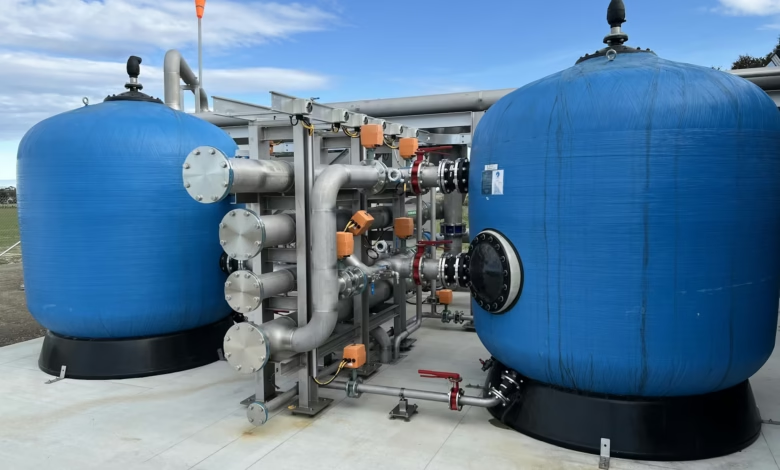
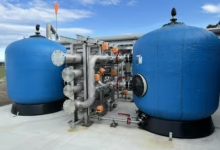
That’s where commercial water treatment solutions become valuable. Instead of relying on generic filters or one-size-fits-all equipment, businesses can install treatment systems specifically designed for their water conditions and operational needs.
Some facilities require water softening to eliminate mineral buildup. Others benefit from reverse osmosis, carbon filtration, ultraviolet disinfection, or specialty treatment systems targeting iron, manganese, or other contaminants.
The goal isn’t simply cleaner water—it’s creating water that’s appropriate for how the business actually uses it.
Equipment Lasts Longer Than You Think
Commercial equipment isn’t cheap. Replacing industrial boilers, cooling towers, steam generators, commercial dishwashers, or manufacturing equipment represents a major investment.
Unfortunately, untreated water slowly attacks these systems every day.
Mineral scale forms inside pipes, restricting water flow. Corrosion weakens metal components. Sediment clogs valves and pumps. Efficiency declines so gradually that operators often don’t notice until repairs become unavoidable.
Proper treatment helps reduce these issues significantly, allowing equipment to operate closer to its intended performance while lowering maintenance frequency.
That’s not just good engineering—it’s good financial planning.
Why commercial water quality Matters Beyond Equipment
People often associate water quality with machinery, but employees and customers notice it too.
Think about a restaurant serving beverages made with poor-quality water. Coffee tastes different. Ice develops an unusual appearance. Glassware may come out spotted despite thorough washing.
Hotels face similar challenges. Guests expect clean showers, spotless bathrooms, soft linens, and pleasant drinking water. Hard water stains or unpleasant tastes can quietly affect customer impressions without anyone directly mentioning the cause.
Good commercial water quality supports a better overall experience, even when customers never consciously think about the water itself.
Sometimes the best improvements are the ones people simply don’t notice because everything works exactly as expected.
Finding the Right Balance
Not every business needs the most advanced treatment technology available.
That’s an important point because some companies overspend on equipment they don’t actually need, while others underinvest and end up paying more through maintenance and downtime.
The smartest approach usually begins with professional water testing. Once the water profile is understood, treatment systems can be selected based on actual conditions instead of assumptions.
This creates a more efficient investment and avoids unnecessary complexity.
Modern water filtration systems Do More Than Filter
Years ago, filtration often meant little more than removing visible particles. Today’s water filtration systems are considerably more advanced.
Modern systems can reduce chlorine taste and odor, capture fine sediment, minimize harmful contaminants, remove dissolved minerals, improve water clarity, and even help protect against certain microorganisms depending on system design.
Many commercial systems now include automated monitoring, programmable controls, and remote performance tracking. These features reduce manual maintenance while ensuring consistent water quality throughout the year.
Technology has quietly made commercial water treatment much smarter than it used to be.
Sustainability Is Becoming Part of the Conversation
Businesses today aren’t only looking at operating costs—they’re also thinking about environmental responsibility.
Efficient water treatment contributes in several ways.
Equipment operating with cleaner water generally consumes less energy. Longer equipment life means fewer replacements and less manufacturing waste. Proper treatment also reduces chemical usage in many industrial applications and minimizes unnecessary water waste caused by scaling or inefficient operation.
For organizations pursuing sustainability goals, improving water quality often supports broader environmental initiatives without requiring dramatic operational changes.
Small improvements, repeated every day, add up surprisingly fast.
Making Water Part of Business Planning
Water management shouldn’t be treated as an emergency project that only receives attention after equipment begins failing.
Instead, it deserves a place alongside preventive maintenance, energy management, and operational planning.
Regular water testing, scheduled maintenance, and periodic system evaluations help businesses stay ahead of problems rather than constantly reacting to them.
It may not be the most exciting part of running a business, but it’s one of those behind-the-scenes investments that pays off quietly month after month.
Final Thoughts
Every successful business depends on consistency. Customers expect reliable service, employees need dependable equipment, and owners want operating costs that remain predictable.
Water quality supports all three.
By understanding what’s in your water and selecting treatment methods that fit your specific operation, you can reduce maintenance expenses, extend equipment life, improve customer experiences, and create a more efficient workplace overall.
At first glance, water might seem like just another utility bill. Look a little closer, though, and it becomes clear that it’s actually one of the most important resources your business relies on every single day.