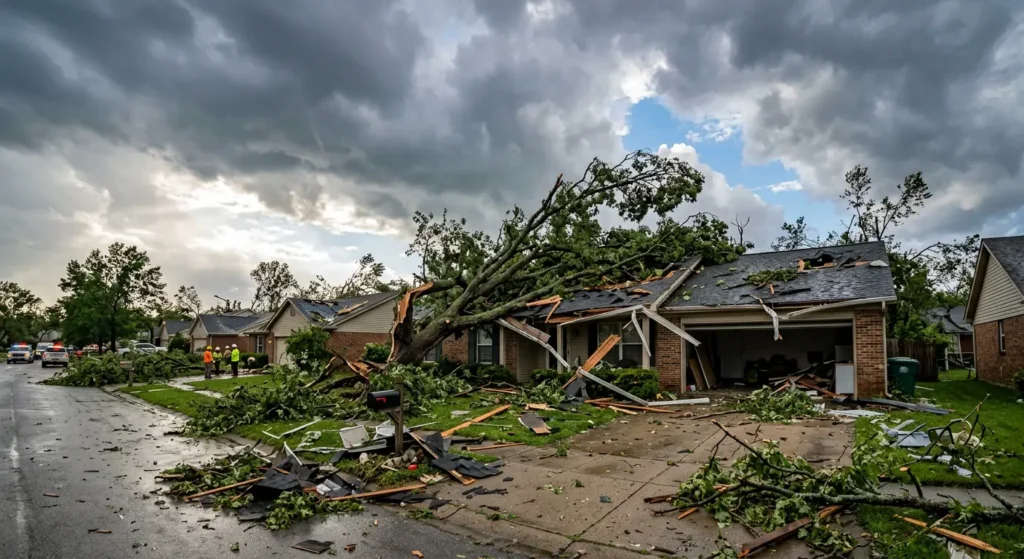
A storm can turn an ordinary day into a stressful one in a matter of minutes. Strong winds, heavy rain, hail, and falling branches can damage a roof, loosen siding, break windows, or leave water where it should never be. Sometimes the damage is obvious. Other times, the signs are small: a damp patch on the ceiling, a shingle in the yard, or a gutter that suddenly hangs at an odd angle. Acting early can help homeowners protect their property and avoid a much larger repair bill later.
The First Steps After a Storm
Once the weather has passed and it’s safe to go outside, take a careful look around the property. Start from the ground rather than climbing onto the roof. Look for missing or curled shingles, dented gutters, damaged flashing, broken branches, loose siding, and debris piled near roof edges. Inside, check ceilings, attic spaces you can safely access, and upper walls for signs of moisture.
Safety should come before everything else. Stay away from downed power lines, unstable trees, and areas where water may have reached electrical equipment. If you suspect structural damage, avoid entering the affected area until a qualified professional has assessed it. A roof that looks mostly intact from the driveway may still have hidden damage, so a visual check is useful but not a substitute for an inspection.
It also helps to take photographs before moving damaged materials, provided you can do so safely. Pictures of the exterior, interior stains, and fallen debris can help document what happened. Keep notes about when the storm occurred and when you first noticed the problem. These simple details may be useful when arranging repairs or speaking with your insurance provider.
Why Small Problems Shouldn’t Be Ignored
A missing shingle might seem like a minor issue, particularly if the weather forecast looks clear. But even a small opening can allow rainwater to reach the roof decking, insulation, or interior walls. Moisture that remains trapped can lead to wood deterioration, peeling paint, unpleasant odors, and mold growth. By the time a stain appears indoors, water may have traveled some distance from the original entry point.
Gutters and downspouts deserve attention, too. Storm debris can block the flow of water, while wind may pull loose sections away from the fascia. When water spills over the edge, it can collect near the foundation or soak exterior walls. That’s why a proper inspection should consider the entire drainage path, not just the roof surface.
Timely storm damage repair can help limit the spread of moisture and prevent damaged materials from causing further trouble. The right solution depends on the extent of the problem. A few displaced shingles may need localized work, while widespread damage, compromised flashing, or weakened decking may call for a more extensive repair plan. A professional assessment helps clarify what’s necessary instead of relying on guesswork.
Choosing the Right Repair Approach
Not every storm calls for a full roof replacement. In some cases, a focused repair is enough to restore protection. In others, the damage may be too widespread, or the existing roofing materials may already be near the end of their useful life. An experienced contractor should explain the condition of the roof, outline practical options, and describe the advantages and limitations of each one.
Ask what the inspection includes. Will the contractor check flashing around chimneys and vents? Are gutters, roof edges, and visible decking being reviewed? Will they look for signs of water intrusion inside the home? These questions help you understand whether the assessment covers the parts of the property most likely to be affected.
Clear communication matters just as much as technical skill. A reliable professional should explain the work in straightforward language, identify any urgent concerns, and provide a written scope before the job begins. If temporary protection is needed to keep rain out while permanent repairs are arranged, ask how that will be handled and whether it is included in the proposed work.
A service approach built for homeowners should make the process easier to understand, not more confusing. That means respectful communication, realistic timelines, careful attention to the property, and answers that don’t leave you wondering what happens next. Home repairs can be disruptive enough without having to chase down basic information.
Understanding Costs and Insurance
Repair costs depend on several factors, including the type of roofing material, the size of the affected area, how accessible the roof is, and whether water has damaged underlying components. A simple repair may be relatively straightforward, while work involving structural materials or interior restoration can take longer and cost more.
If you plan to make an insurance claim, contact your insurer and ask about the required process. Policies differ, so don’t assume every type of storm damage is covered or that a particular repair will be reimbursed. Keep copies of photographs, inspection findings, estimates, invoices, and any communication related to the claim. Avoid signing agreements you don’t fully understand, and be cautious of anyone who pressures you to make an immediate decision.
It’s reasonable to compare estimates, but price shouldn’t be the only factor. A very low quote may leave out important work or use materials that aren’t suitable for your roof. Compare the proposed scope, materials, warranty details, cleanup arrangements, and expected schedule. A clear estimate gives you a better basis for making a confident decision.
Planning Ahead for the Next Storm
No roof can prevent every weather-related problem, but routine maintenance can reduce the likelihood of avoidable damage. Have the roof inspected periodically, especially if it’s older or has experienced previous leaks. Keep gutters clear, trim branches that hang over the house, and look for loose exterior materials before storm season arrives. If you notice recurring leaks or areas that require frequent patching, ask whether a more durable long-term solution would make sense.
Homeowners can also prepare a simple storm checklist. Keep a flashlight, basic supplies, emergency contacts, and insurance information in a place that’s easy to reach. Know how to shut off utilities if necessary, but only do so when it is safe. These preparations may feel unnecessary on a calm afternoon, yet they can be valuable when conditions change quickly.
Get Clear Answers Before the Damage Gets Worse
After a storm, uncertainty is often the hardest part. You may not know whether a roof needs a small repair, a more involved restoration, or a closer inspection of hidden areas. Getting professional advice early can help you understand the condition of your home and prioritize the work that matters most.
If you’ve noticed missing shingles, leaks, loose gutters, or other signs of weather-related damage, request a free estimate to learn what repairs may be needed and what the next steps could involve. A thoughtful assessment gives you useful information before you commit to a project.
Your home protects the people and belongings that matter to you. Looking after it after severe weather isn’t simply about fixing what’s visible; it’s about restoring that sense of security and making sure a small problem doesn’t quietly become a bigger one.