
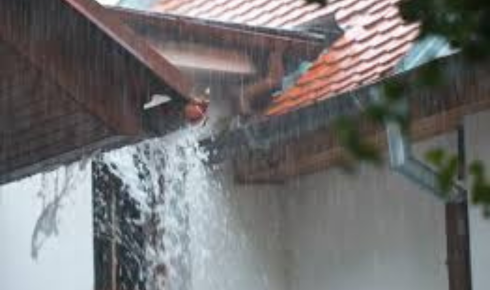
There’s a particular kind of sound that gets your attention faster than most—a quiet drip in the middle of the night. It’s not loud, not dramatic, but it carries a message. Something, somewhere above you, isn’t doing its job quite the way it used to.
And suddenly, your roof—something you rarely think about—becomes the center of your attention.
It’s funny how that works. The things we rely on the most are often the things we notice the least… until they start to change.
The First Sign Is Rarely the First Problem
Most people assume that when they see water inside their home, that’s when the issue begins. But in reality, roof leak problems usually start long before that first drip appears.
Water doesn’t rush in all at once. It finds small openings, seeps through tiny gaps, and slowly works its way down. By the time it becomes visible, it’s often been there for a while—quietly making its presence known in places you can’t see.
That’s why the first visible sign isn’t always the beginning. It’s just the moment you finally notice.
When Damage Hides in Plain Sight
Not all roof issues announce themselves with water. Some stay hidden, showing up in more subtle ways.
A slightly sagging section. Shingles that don’t sit quite right anymore. Areas that look worn out compared to the rest. These are often signs of damaged roof problems—the kind that develop slowly over time.
Weather plays a big role here. Heat, rain, wind, even temperature changes throughout the day can stress materials. And over months or years, that stress starts to show.
But because the changes are gradual, they’re easy to overlook. You get used to them, even when they’re trying to tell you something.
The Domino Effect You Don’t See Coming
One of the most underestimated aspects of roofing issues is how connected everything is.
A small crack leads to moisture buildup. Moisture weakens surrounding materials. Those materials, in turn, make other parts of the roof more vulnerable.
Before you know it, what started as a minor issue becomes a chain reaction.
This is how roofing issues grow—not through sudden failure, but through a series of small, linked problems that build on each other.
And the longer they go unnoticed, the more complicated they become.
Why Water Always Wins
If there’s one thing roofs struggle with the most, it’s water. Not because they’re poorly designed, but because water is persistent.
It doesn’t need a big opening. It just needs time.
It finds weak points. It tests edges. It sits, waits, and slowly moves through layers that weren’t meant to hold it.
That’s why even a small leak matters. Not because of what it does immediately, but because of what it can lead to over time.
The Cost of “It’s Not That Bad”
There’s a common mindset when it comes to roof problems: It’s not that bad yet.
And in many cases, that’s true—at least in the moment.
But roofs don’t stay in the same condition. They change. They age. They respond to every bit of weather they face.
Waiting doesn’t stop that process. It just gives it more time to develop.
And sometimes, what feels like patience is actually delay.
What a Strong Roof Feels Like
You might not think about it often, but a reliable roof creates a certain kind of comfort.
You don’t worry when it rains. You don’t listen for unusual sounds. You don’t check the ceiling for signs of trouble.
It’s just… there. Quiet, dependable, doing its job without drawing attention.
And when that feeling disappears, you realize how much it mattered.
A More Practical Way to Stay Ahead
You don’t need to become an expert in roofing to take care of your home. But a little awareness can go a long way.
Pay attention to changes. Notice anything unusual inside your home—those signs often show up before problems become visible outside.
After heavy weather, take a moment to look around. You don’t need a full inspection, just a general sense of whether things look different.
And if something feels off, it’s okay to ask for a professional opinion. Sometimes, that’s the simplest way to get clarity.
Ending With a Simple Reminder
Your roof doesn’t ask for much. It stands between you and everything outside, handling pressure, weather, and time without complaint.
But every now and then, it sends a signal.
Not a loud one. Not an urgent one. Just enough to let you know something’s changing.
And when you catch that signal early, you’re not just fixing a problem—you’re protecting everything underneath it.
Sometimes, all it takes is listening before the drip becomes something louder.