
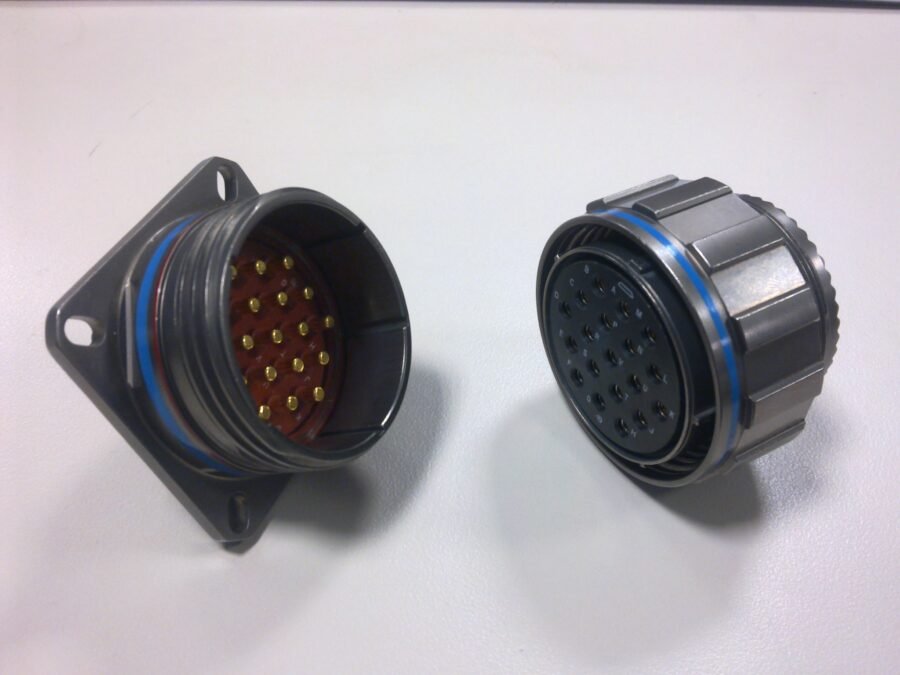
Winning a defence contract in India is a multi-year process involving technology demonstrations, trials, vendor qualifications and negotiations that test the endurance of even well-resourced companies. The connector specification embedded in a defence system is a small part of that process, but it is a part that causes disproportionate disruption when it goes wrong. A connector specified from a foreign catalogue without a qualified domestic equivalent fails at the sourcing stage when indigenisation rules tighten. A connector procured from an unqualified supplier fails at the inspection stage when the quality assurance directorate rejects the batch. Understanding how to navigate the qualification and procurement landscape for mil grade connectors in India saves time, money and relationships.
What Mil Grade Actually Means in the Indian Context
The term mil grade is applied loosely in the market, and not every product carrying the label is manufactured and tested to the same standard. Genuine mil grade connectors are built to published government specifications — primarily MIL-DTL-5015, MIL-C-26482, MIL-DTL-38999 and the German VG specification family — and their manufacture involves documented material controls, plating specifications, dimensional tolerances and qualification testing that are verified by a recognised authority. In India, this verification comes through the Ministry of Defence’s quality assurance directorates, which test and approve connector manufacturers before their products can be specified in defence contracts.
A connector that a catalogue describes as mil grade but that has not undergone this qualification process is, from a defence procurement standpoint, an unqualified commercial part. Using it in a defence system creates a non-conformance that will be identified at inspection and must be resolved at the programme’s expense, typically by replacement with a qualified part and re-testing of the affected assemblies.
The Approved Vendor List System
Defence public sector undertakings including BEL, BEML, HAL and the ordnance factory board each maintain approved vendor lists for critical components. The connector categories on these lists specify not just the product standard but the approved manufacturers who may supply it. A system integrator building to a DPSU specification must source connectors from the approved list; substituting an alternative manufacturer, even one with apparently equivalent specifications, requires a formal equivalence approval process that can take months.
For private sector system integrators working on iDEX projects, strategic partnership programmes or direct procurement contracts, the expectation of sourcing from qualified manufacturers is equally firm, even where a formal approved list does not yet apply. Defence quality assurance directorates retain the right to inspect and reject components during production acceptance, and a connector from an unqualified source is a reliable trigger for such rejection.
Specifying Correctly from the Start
MIL-DTL-5015: The Threaded Coupling Standard
MIL-DTL-5015 and its Indian-produced equivalents under the MS designation cover the largest family of mil grade connectors in use across Indian defence and heavy industry. Shell sizes from size 10 through size 36, dozens of insert arrangements and multiple service classes give designers the flexibility to cover almost any multipin interconnection requirement within a single specification framework. Domestically qualified mil grade connectors built to this specification are available from approved Indian manufacturers, with full qualification documentation and traceability to satisfy defence inspection requirements.
VG Specifications: The Reverse Bayonet Alternative
For programmes involving European-origin platforms or where rapid field mating is a priority, the VG 95234 family, available in India under the MG designation, provides a qualified alternative. MG connectors are approved for Indian railway applications and are used on several Indian Army ground vehicle programmes where the reverse bayonet coupling’s resistance to vibrational loosening is valued. Specifying from this family requires familiarity with the VG designation system and an understanding of how it maps to the MIL families with which it shares some dimensional characteristics.
Common Specification Errors and How to Avoid Them
The most frequent error is specifying a connector by manufacturer part number rather than by the government specification it conforms to. Part numbers are manufacturer-specific; specifications are universal. A specification-based callout allows qualified domestic manufacturers to supply the requirement, maintains flexibility for the life of the programme and satisfies indigenisation requirements in a way that a foreign part number cannot.
The second most common error is under-specifying the service class. Service classes within MIL-DTL-5015 differentiate connectors by their environmental sealing and contact construction. Specifying a lower service class to reduce cost produces a connector that passes the initial inspection but fails in the field environment that the higher service class was designed to handle.
The third error is omitting accessories from the specification. A connector without a defined backshell, cable clamp and coupling torque requirement is incomplete. The defence inspection authority will check the assembly, and a connector installed without its proper accessory set will not meet the sealing or retention requirements of the specification.
Working with Qualified Indian Manufacturers
Established defence connector manufacturers in India who hold Ministry of Defence qualifications are the correct sourcing partners for any defence programme. They can advise on specification callouts that will pass inspection, provide the qualification documentation needed for vendor registration with DPSUs, and support the programme through its life with spare contacts, replacement parts and engineering advice. Allied Electronics Corporation, manufacturing mil grade circular connectors in Mumbai since 1966, is one such manufacturer with a documented history of supplying Indian defence programmes.
Conclusion
Mil grade connector procurement in India is a discipline that rewards preparation. Define the specification correctly, source from qualified manufacturers on approved vendor lists, and include accessories in the technical package from the start. A fifteen-minute conversation with a qualified manufacturer’s application engineer at the design stage will prevent hours of rework at the production acceptance stage. That is a straightforward investment with a reliable return.