An Indian wedding is one of the few occasions where jewellery is purchased for a lifetime, not a season. The pieces worn on the wedding day often become heirlooms — reworn at anniversaries, insured carefully and eventually passed to the next generation. That single fact changes how bridal gold should be chosen: not by trend, but by craft, purity and the lasting relevance of the design.
Build the Look Around the Necklace Set
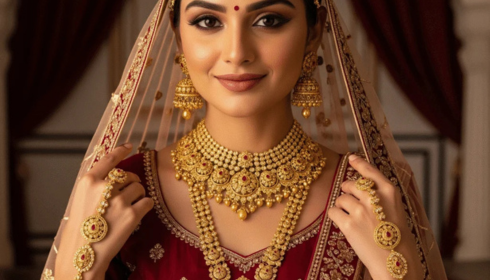
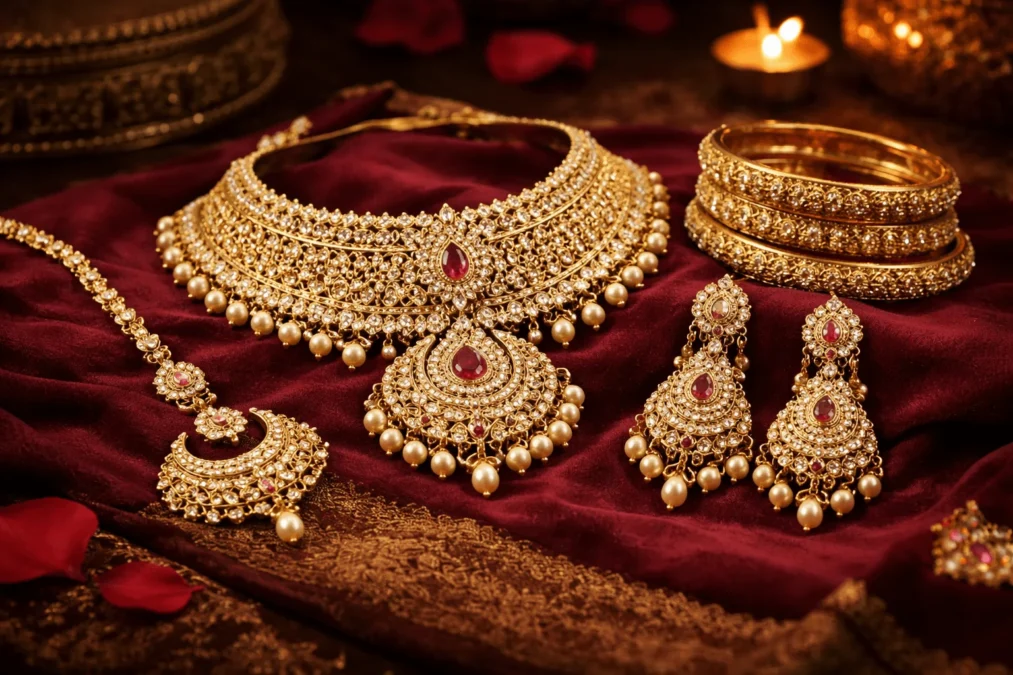
Every bridal trousseau is anchored by the neckpiece. When selecting a gold necklace set, pay attention to three things before aesthetics: the length relative to your neckline, how weight is distributed across the chain, and whether the matching earrings are comfortable for a full day of ceremonies. A choker-length set suits high-neck blouses and Paithani drapes, while a princess-length or layered set works well with deeper necklines. Brides who intend to reuse the set at festivals later should look for designs where the pendant or earrings can be worn independently.
Purity, Hallmarking and Documentation
Most Indian bridal gold is crafted in 22 karat, which gives the rich warm tone traditional wear demands while remaining durable enough for fine detailing. Every piece should carry a BIS hallmark with a six-digit HUID code, independently verifiable. Always ask for an itemised invoice separating gold weight, stone weight and making charges — this documentation becomes essential for insurance, exchange and eventual resale. Never accept a combined weight figure without the breakup.
Invest in the Wrists
Kadas are one of the most enduring investments in any jewellery collection. A well-chosen gold kada designs in a plain or lightly textured finish pairs equally well with a silk saree, a cotton kurta or western formals, and suits every age. For daily wear, choose a weight you can forget on the wrist — typically fifteen to thirty grams — and confirm that the diameter or opening mechanism is comfortable before purchasing.
Motifs That Age Gracefully
Trends in jewellery move more slowly than clothing, but they do move. Motifs rooted in tradition — paisleys, lotus buds, peacocks, temple figures — have remained relevant across generations and are far safer choices for wedding gold than statement designs tied to a particular season. Similarly, handcrafted textures such as jali work, granulation and beaten-gold finishes tend to look richer with age, while heavily machine-polished surfaces can feel dated within a few years.
Shop Early and From a Jeweller You Can Return To
Begin jewellery shopping at least two to three months before the wedding to allow time for customisations, resizing and any special orders. Try every piece with fabric similar to your wedding attire, and photograph shortlisted options in natural light before committing. Heritage jewellers such as Waman Hari Pethe Sons, who have served Maharashtra’s brides for over a century, offer documented buy-back and exchange policies alongside craftsmanship refined through generations — reassurance that matters as much as the design on the counter.
Conclusion
Timeless bridal jewellery is not about buying the heaviest or most elaborate pieces. It is about hallmarked gold, classic motifs, well-documented purchases and a jeweller whose reputation has outlasted trends. Begin with the necklace set and the kada, add pieces that earn their keep across future occasions, and let every ornament tell a story worth passing on.