The Enduring Enigma of Lucy Bolam: Unraveling Fact, Fiction, and a North East Mystery

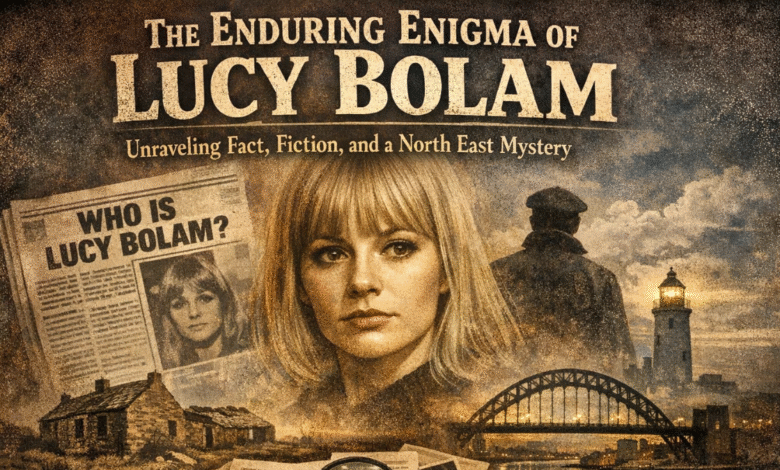
The name Lucy Bolam whispers through the corridors of true crime and local folklore in the North East of England, a haunting melody of mystery, media distortion, and unanswered questions. Unlike many famous cases, the story of Lucy Bolam is not a straightforward tale of crime and punishment. Instead, it is a complex tapestry woven from threads of a real person’s tragic disappearance, a sensationalized fictional narrative, and the subsequent, often painful, collision between the two.


To understand the phenomenon of Lucy Bolam is to embark on a journey that examines how reality can be overshadowed by fiction, how families are caught in the crossfire of public fascination, and why some names endure in the public consciousness long after the facts have blurred. This article seeks to separate the layers of this enigma, paying respect to the real woman at its heart while exploring the cultural footprint of the story that borrowed her name.
The core of the Lucy Bolam mystery is fundamentally a human tragedy. In 1970, a woman named Lucy Bolam vanished from her home in Gosforth, Newcastle upon Tyne. Her disappearance was, and remains, a deeply personal and devastating event for her family—a real-life ordeal marked by grief and the agonizing void of not knowing. For decades, this was the extent of the story known mainly to those in the local community and the investigating authorities.
However, the name “Lucy Bolam” was catapulted into national and then international awareness not purely because of this original disappearance, but due to its shocking and inadvertent association with a series of horrific crimes committed years later. This unlikely and distressing linkage created a perfect storm of confusion, one where a victim’s identity became entangled with monstrous acts, demonstrating the profound and sometimes cruel power of a name.
The Real Lucy Bolam: A Life and Disappearance
To anchor this story in reality, we must begin with the real Lucy Bolam. Born into a well-respected family in the North East, Lucy was a woman with her own life, aspirations, and relationships before she became a headline or a plot point. She lived in the suburb of Gosforth, an area of Newcastle known for its quiet, leafy streets—a backdrop that makes her sudden vanishing all the more unsettling. Details of her life before 1970 are kept respectfully private by surviving relatives, but public records and local knowledge paint a picture of an ordinary woman whose life took a profoundly tragic turn.
On that day in 1970, Lucy Bolam stepped out of her home and seemingly vanished into thin air. The investigation that followed was extensive, as police pursued leads and the community grappled with the shock of such an event happening in their midst. Despite these efforts, no conclusive evidence was found, and no body was recovered. The case grew cold, leaving a family in perpetual limbo, a classic and heartbreaking “missing person” scenario with no resolution. The mystery of what truly happened to Lucy Bolam remains locked in the past, a silent testament to a private sorrow that became the unwilling seed for a very public and very different narrative.
The Fictional Inferno: “Lucy Bolam” and the Bindon Murders
The trajectory of the Lucy Bolam story changed irrevocably in the late 1970s, not in Newcastle, but in London. This is where fact and fiction performed a dreadful dance. The name became sensationalized due to its connection with John Bindon, a notorious London gangster and actor, and his girlfriend, a former model. In 1978, this woman was charged with murder. During the intense media frenzy that surrounded the trial, a barrister allegedly invoked the name “Lucy Bolam” in court. This was not a reference to the missing woman from Gosforth, but rather a dramatic, and perhaps careless, pseudonym used to protect the identity of the real defendant due to legal restrictions at the time.
The press, hungry for a sensational story, latched onto this name. “
” became the tabloid shorthand for the woman at the center of a sordid tale of sex, violence, and celebrity underworld figures. The real defendant was eventually acquitted, but the fictional “Lucy Bolam” character had already been born in the public imagination—a femme fatale entangled with a violent criminal. This media-created persona took on a life of its own, completely detached from the quiet reality of the missing North East woman. It was a cruel twist of fate, where one woman’s tragedy was overshadowed by the fictionalized scandal of another.
The Collision of Worlds: Media, Myth, and Family Anguish
The consequences of this name collision were devastating for the family of the real Lucy Bolam. Imagine their horror: for years, they had endured the private pain of a missing loved one. Then, suddenly, they saw her name splashed across national newspapers, not in the context of a search or a renewed investigation, but as a central character in a salacious murder trial involving gangsters. The private grief they carried was now invaded by a grotesque and inaccurate public narrative. Every headline was a fresh wound, a distortion of their sister’s, daughter’s, or aunt’s memory.
The family was forced into a position no one should ever occupy: having to publicly deny that their missing relative was the person being discussed in the media. They issued statements, pleaded with the press, and fought to reclaim Lucy’s identity from the myth. This period highlighted the profound ethical carelessness that can occur in sensational journalism, where the human cost of a catchy name is utterly overlooked. The anguish experienced by the Bolam family is an integral, and often overlooked, chapter in this story—a stark reminder that behind every viral name or mysterious legend, there are real people whose lives are profoundly affected.
The Cultural Echo: Why the Name Lucy Bolam Endures
Decades later, the name Lucy Bolam still resonates. But why? The endurance is less about the details of either the disappearance or the trial and more about the powerful, almost archetypal, narrative that was created. The story combines several gripping elements: an unsolved local mystery, the glamour and danger of London’s criminal underworld, an enigmatic female figure, and a shocking legal case. It’s a potent mix that fuels speculation, amateur investigation, and creative retelling.
The tale has evolved into a modern folktale, particularly within the North East. It is shared on internet forums, in true crime blogs, and in local pubs, with each retelling adding or subtracting details. The story of Lucy Bolam has become a cultural touchstone for discussing broader themes: the fallibility of memory, the distortion of media, and our collective fascination with the mysterious and macabre. The lack of clear answers in both the original disappearance and the subsequent media saga creates a vacuum that people feel compelled to fill with their own theories and stories, ensuring the legend lives on.
Separating Fact from Folklore: A Critical Analysis
To navigate the Lucy Bolam enigma responsibly, one must actively separate the facts from the layers of fiction. This requires a disciplined look at the two parallel tracks. On one track is the factual, documented disappearance of a woman named Lucy Bolam from Gosforth in 1970—a police case that remains open but inactive, a family’s private loss. On the other track is the documented media history of the 1978 trial, where the name was used as a legal pseudonym and then sensationalized, creating a fictional character wholly unrelated to the first.
The critical error—and the source of all enduring confusion—is the conflation of these two tracks. Conspiracy theories sometimes suggest dark connections, but no credible evidence has ever linked the missing Lucy Bolam to the world of John Bindon or the London crimes. Law enforcement officials from both investigations have treated them as separate entities. The connection is one of tragic coincidence and journalistic negligence, not criminal conspiracy. Understanding this distinction is crucial for anyone seeking the truth behind the name Lucy Bolam.
The Legacy in True Crime and Popular Culture
The Lucy Bolam story has inevitably influenced true crime as a genre. It serves as a masterclass in how a narrative can be constructed, often at the expense of truth and sensitivity. The case is frequently cited in discussions about media ethics, the right to privacy for victims’ families, and the dangers of “trial by media.” It underscores how a story can escape the confines of its facts and become a malleable myth, shaped by societal biases and a thirst for drama.
In popular culture, echoes of the Lucy Bolam archetype—the mysterious woman linked to criminal danger—can be found in literature, film, and television. While not directly adapted, the essence of the story, a name evoking hidden danger and tragic beauty, has permeated creative works. It’s a cautionary tale about the power of branding, even inadvertent branding, in the world of crime. The name itself has become a kind of shorthand for a particular type of enigmatic, troubled figure, completely divorced from the real woman who bore it.
The Psychological Fascination with Unsolved Mysteries
The enduring interest in the Lucy Bolam phenomenon taps into a deep-seated human psychological need: the desire for resolution. Our brains are pattern-seeking machines, and unresolved narratives create cognitive dissonance. The lack of a definitive ending to either strand of the Lucy Bolam story—no closure for the family, no clear link ever officially explained to the public’s satisfaction—makes it mentally “sticky.” We return to it, trying to piece together a puzzle that may, in fact, have pieces from two different boxes.
This fascination is also driven by the “unknowable” element. The real Lucy Bolam’s fate is a profound mystery. The motives behind the use of her name in court are obscured by time and legal history. This double layer of uncertainty is irresistible to many. It allows people to project their own interpretations, fears, and curiosities onto the story, making it a personal as well as a public obsession. The mystery of Lucy Bolam is a mirror reflecting our own relationship with the unknown.
The Geographical Heart: The North East Connection
Any discussion of Lucy Bolam is incomplete without anchoring it firmly in its geographical context: the North East of England. The region has a strong sense of identity, community, and local history. The disappearance happened here, in the everyday streets of Gosforth, which makes the story feel close to home for locals. It’s a regional legend, a piece of local lore that is passed down and debated within the community.
This local connection also fuels a sense of protective ownership over the narrative. Many in the North East are keen to correct the record, to emphasize the reality of the missing local woman against the fictional London scandal. The landscape itself—from the urban streets of Newcastle to the surrounding countryside—often features in speculations about the original disappearance, with locals pondering locations and possibilities that outsiders would never consider. The story of Lucy Bolam is, in this sense, a story deeply rooted in a specific place and its people.
Media Responsibility and the Ethics of Storytelling
The Lucy Bolam saga stands as a stark, decades-old lesson in media responsibility. It raises critical questions that are even more relevant in today’s digital age of instant sharing and viral trends: What is the ethical duty of journalists when using names, especially pseudonyms? How should the privacy and trauma of innocent bystanders (like the Bolam family) be weighed against the public’s “right to know” or, more accurately, the public’s appetite for sensational stories? The use of the name, without due diligence to check for living or missing persons who might be affected, was a catastrophic failure.
This case study should be mandatory in journalism schools. It demonstrates that words have lasting, real-world consequences far beyond selling newspapers. The pain inflicted on the Bolam family was not an accidental byproduct; it was a direct result of careless storytelling. As we consume true crime content today—from podcasts to documentaries—the story of Lucy Bolam reminds us to ask: Who is being harmed by this narrative? Is the pursuit of entertainment overriding basic human decency?
The Legal and Procedural Questions
From a legal standpoint, the use of the name “Lucy Bolam” in the 1978 trial raises intriguing procedural questions. The practice of using pseudonyms or letters (like “Miss X”) to protect a defendant’s identity before certain legal reforms was not uncommon. However, the choice of a full, real-sounding name was unusual. Who chose it? The barrister? The judge? Was it picked at random from a public record or a phone book? The answers to these questions are lost to history, but they are central to the mystery.
This legal angle adds another layer of bureaucratic tragedy. A routine (if flawed) legal procedure inadvertently triggered a national scandal and inflicted secondary trauma on a grieving family. It highlights how systems designed to administer justice can, through minor oversights or a lack of holistic thinking, create unintended and widespread injustice elsewhere. The search for answers about Lucy Bolam, therefore, isn’t just a search for a person, but also a search for accountability within the institutions that shaped her story.
The Power of a Name: Identity, Memory, and Exploitation
At its most philosophical core, the Lucy Bolam story is about the power of a name. A name is the cornerstone of personal identity. For the real Lucy, it was her identity, stolen first by circumstance and then by the media. For the fictional “Lucy Bolam,” it was an identity constructed for legal convenience and media exploitation, a blank slate onto which the public could project a thrilling but false narrative.
The collision shows how fragile our claim to our own names can be in the public sphere. The Bolam family’s fight was, essentially, a fight to restore the true meaning of their loved one’s name—to reclaim it from exploitation and return it to its proper place in their private memory. This battle is a profound one, touching on themes of legacy, memory, and who has the right to control the narrative of a life after it has been impacted by tragedy or absorbed into the public domain.
A Comparative Look: Similar Cases of Confused Identity
The Lucy Bolam case is unique in its specifics, but it is not alone in the annals of true crime where identity has become confused or exploited. Other cases involve mistaken identity, where an innocent person is swept into a crime narrative, or where victims’ names are misused in the media. For instance, cases involving “John Does” or unidentified persons sometimes see families mistakenly claiming the victim due to vague similarities, leading to complex emotional ordeals.
What makes the Lucy Bolam story distinct is the duration and scale of the confusion. It wasn’t a momentary mix-up corrected the next day; it was a fundamental rebranding that spanned decades and entered popular culture. Comparing it to other cases helps to isolate the specific factors that allowed this particular story to spiral: the dramatic nature of the Bindon trial, the catchy, alliterative name itself, and the pre-existing, unresolved mystery of the disappearance. It was a perfect storm of unfortunate circumstances.
The Role of the Internet in Perpetuating the Mystery
The digital age has dramatically transformed the Lucy Bolam narrative. In the pre-Internet era, the story was propagated through newspapers, word of mouth, and the occasional television mention. Today, it lives and grows online. Forums like Reddit and dedicated true crime websites are hotbeds of discussion, where new generations discover the story, often with the facts already hopelessly intertwined.
This has a dual effect. On one hand, it can perpetuate errors and wild conspiracy theories at lightning speed. A misleading post or video can cement false connections in thousands of minds instantly. On the other hand, the internet also provides a platform for more rigorous research, for the sharing of primary sources like scanned newspaper archives, and for the voices of those closer to the case (or the region) to provide correction and context. The digital footprint of Lucy Bolam is vast, contradictory, and constantly evolving, making the quest for a single, authoritative version of the truth more challenging than ever.
Voices from the North East: Local Perspectives and Recollections
To truly grasp the impact of the Lucy Bolam story, one must listen to the voices from the North East. Older residents of Gosforth and Newcastle may have vague or clear recollections of the original disappearance—the initial shock, the local searches, the gradual fading from daily conversation. These memories are precious fragments of factual history, untainted by the later London drama.
Many locals express a mixture of sympathy for the Bolam family and frustration at the way their region’s local tragedy was hijacked by a national scandal. There’s often a palpable desire to set the record straight, to assert that “our” Lucy Bolam was not “that” Lucy Bolam. These community-held memories and perspectives are a vital corrective to the dominant, media-driven narrative. They anchor the story in a real place with real people, reminding us that this is not just an abstract mystery, but an event that rippled through a specific community.
The Unanswered Questions and Ongoing Speculation
Despite our best efforts to separate fact from fiction, a cloud of unanswered questions will always surround the name Lucy Bolam. For the original disappearance, the questions are agonizingly simple: What happened to Lucy Bolam in 1970? Was it foul play, an accident, or a deliberate decision to vanish? Where is she? For the secondary, media-driven strand, questions remain about the selection of the pseudonym and the full impact of the media’s actions.
These unanswered questions are the engine of ongoing speculation. True crime enthusiasts and amateur sleuths continue to propose theories, re-examine old newspaper clippings, and look for connections, however tenuous. This activity, while often well-intentioned, walks a fine line between respectful interest and intrusive obsession. The central challenge for anyone engaging with the story is to honor the unanswered questions while respecting the boundaries of a family’s private grief and the limits of what is knowable in history.
Table: The Two Realities of “Lucy Bolam”
| Aspect | The Real Lucy Bolam (Gosforth) | The Media “Lucy Bolam” (London) |
|---|---|---|
| Timeframe | 1970 (Disappearance) | 1978 (Murder Trial) |
| Location | Newcastle upon Tyne, North East England | London, England |
| Context | A missing person case; a private family tragedy. | A criminal trial involving gangster John Bindon; a media sensation. |
| Status | An unresolved missing person. A victim. | A legal pseudonym for an acquitted defendant. A media construct. |
| Legacy | A local mystery; a family’s enduring loss. | A tabloid legend; a fixture in true crime folklore. |
| Core Truth | Fact. | Fiction (based on real events but using a borrowed, real name). |
Moving Forward: A Respectful Approach to the Story
So, how should we, as consumers of history and mystery, approach the story of Lucy Bolam moving forward? The most respectful and intellectually honest approach is to hold two truths simultaneously. First, to acknowledge and remember the real Lucy Bolam as a person who lived, disappeared, and is mourned. Her story deserves to be told with dignity, as a standalone missing person’s case. Second, to understand the separate, media-created “Lucy Bolam” as a cultural artifact—a case study in sensational journalism and the birth of an urban legend.
When discussing the topic, clarity is paramount. We must specify which “Lucy Bolam” we are referring to, or explicitly state that we are talking about the confused phenomenon itself. We should center the experience of the family and treat the original disappearance with the sensitivity due to any unresolved tragedy. As one commentator aptly noted:
“The tragedy of Lucy Bolam is doubled: first in her vanishing, and second in the theft of her name for a story that was never hers.”
This quote encapsulates the heart of the matter. Our engagement should aim to restore a measure of that stolen identity to its rightful owner, even if only in how we choose to remember and retell the tale.
Conclusion: The Woman, The Myth, and The Memory
The enigma of Lucy Bolam is a labyrinth with two entrances. One leads to a quiet street in Gosforth in 1970, to a mystery of absence and loss that is poignant and deeply human. The other leads to the bustling Old Bailey in 1978, to a world of celebrity, crime, and tabloid frenzy. These paths crossed most devastatingly, creating a story that is less about what we know and more about how we know it, and the damage that can be done when stories are told without care.
The legacy of Lucy Bolam is complex. It is a legacy of familial grief, of journalistic failure, of public fascination, and of the enduring power of an unsolved puzzle. It reminds us that behind every captivating mystery label, there is a human reality—often a painful one. To honor the story is to commit to telling it with nuance, to separating the woman from the myth, and to allowing the memory of the real Lucy Bolam to exist apart from the sensational legend that bears her name. In doing so, we pay respect not just to a mystery, but to a person.
FAQ
Who was the real Lucy Bolam?
The real Lucy Bolam was a woman from Gosforth, Newcastle upon Tyne, who disappeared in 1970. Her case is an unresolved missing person investigation, and her disappearance remains a source of profound sadness for her surviving family. She is a distinct individual whose story was tragically and inadvertently conflated with a later, unrelated media event.
How did Lucy Bolam’s name become associated with a London murder trial?
During the 1978 trial of a woman connected to gangster John Bindon, the name “Lucy Bolam” was used as a pseudonym in court, likely to protect the real defendant’s identity before she was acquitted. The press sensationalized the case and repeatedly used this pseudonym, creating a fictional, scandalous character. This media-created “Lucy Bolam” was mistakenly linked by the public to the missing woman from Newcastle.
Was Lucy Bolam ever found?
No, Lucy Bolam has never been found. Her disappearance from Gosforth in 1970 remains an open but cold case. Despite extensive investigations at the time, no conclusive evidence regarding her fate was discovered, and no body has ever been recovered.
What is the connection between Lucy Bolam and the North East?
Lucy Bolam’s disappearance is a North East story. She lived in Gosforth, Newcastle, and vanished from there. The mystery is a part of local history and folklore in the region. The subsequent national media scandal caused significant distress to her North East-based family, who had to endure seeing her name associated with crimes and a lifestyle utterly disconnected from her life.
Why does the story of Lucy Bolam remain so fascinating today?
The story remains fascinating due to its unique layers of mystery and human drama. It combines an unsolved disappearance with a sensational tabloid saga, creating a powerful, confusing, and enduring narrative. The lack of clear answers, the ethical questions about media responsibility, and the psychological draw of unresolved stories all contribute to its lasting place in true crime folklore and North East legend.
You may also read
Georgia Craig Farmer: Cultivating Legacy, Community, and Change