Elon Musk’s Net Worth: The Rollercoaster Fortune: A Deep Dive into Elon Musk’s Net Worth


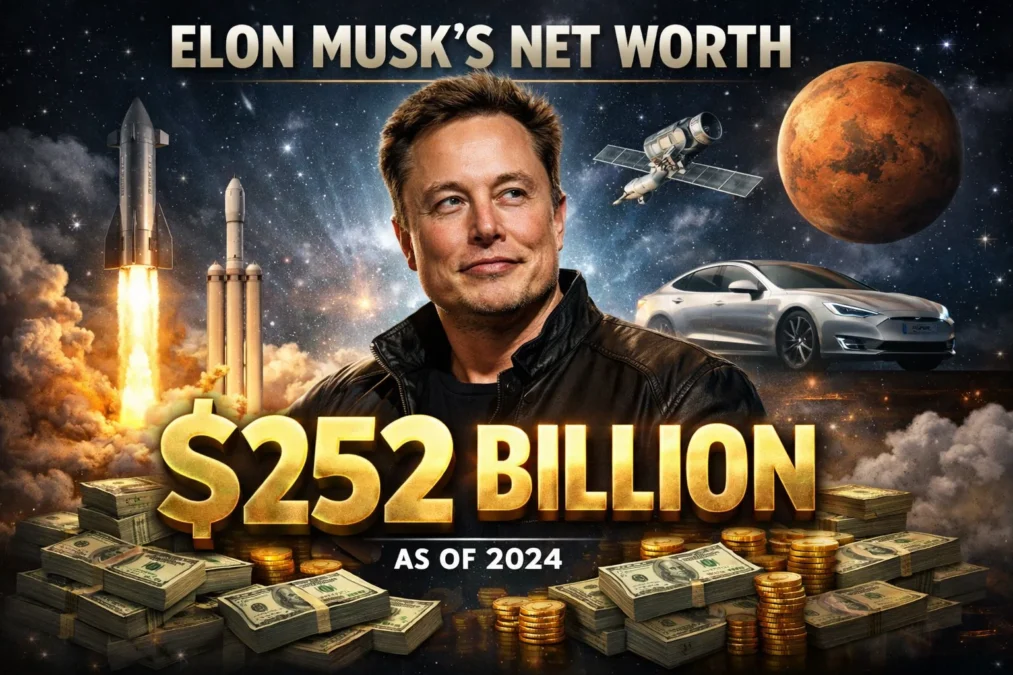
Elon Musk’s net worth is not a static number on a bank statement. It is a living, breathing, and often wildly fluctuating entity, a direct reflection of his unconventional ventures, the stock market’s temperament, and his own controversial public persona. To ask “what is Elon Musk’s net worth?” is to open a window into the modern economy itself, where vast wealth is tied not to gold or real estate, but to the perceived future value of disruptive companies.


It’s a figure measured in tens of billions, yet it can soar or plummet by billions in a single trading day. Understanding his fortune requires moving beyond a simple headline number and exploring the intricate, volatile tapestry of equity, ambition, and risk that it represents. This isn’t just about the wealth of one man; it’s a case study in how value is created in the 21st century.
His net worth is primarily a constellation of ownership stakes in the companies he leads or founded. Unlike traditional billionaires with diversified portfolios, Musk’s wealth is famously concentrated, making it extraordinarily powerful yet vulnerable. This concentration means that the question of Elon Musk’s net worth is inherently tied to questions about the stability of Tesla’s stock price, the success of a SpaceX rocket launch, or the viability of a neural interface at Neuralink. It’s a fortune built on futures—the future of transportation, energy, space colonization, and human-computer symbiosis. As such, its trajectory is a constant topic of global fascination, debate, and analysis.
Understanding the Engine of Musk’s Wealth
The foundation of Elon Musk’s net worth is not cash, but ownership. The vast majority of his wealth exists as shares in his companies. This is a crucial distinction. If you or I have a net worth of a million dollars, it might be in property, savings, and investments. For Musk, it’s almost entirely in the equity of Tesla, SpaceX, and his other ventures. This structure means his wealth is highly illiquid and subject to extreme market volatility. He cannot simply sell billions in Tesla stock without potentially crashing the share price and triggering market panic.
This equity-centric model also explains his compensation strategies. Famously, he does not take a traditional salary from Tesla. Instead, he has been granted massive, performance-based stock option packages. The 2018 CEO compensation plan, arguably the largest in corporate history, awarded him tranches of stock options contingent on Tesla hitting specific market capitalization and operational milestones. As Tesla’s valuation skyrocketed, so did the value of these options, fueling exponential growth in Elon Musk’s net worth. This alignment of his personal fortune with the company’s market performance is both a motivator and a point of criticism, as it can incentivize a focus on stock price alongside product development.
The second key engine is leverage and reinvestment. Musk doesn’t just hold his shares; he uses them as collateral for loans. He has famously pledged portions of his Tesla stock to secure personal loans, which he reportedly uses to fund other ventures or cover tax obligations. This creates a complex financial web. A significant drop in Tesla’s share price could trigger margin calls, forcing it to either pledge more collateral or sell shares, potentially creating a downward spiral. This risky financial engineering is a hallmark of his approach, demonstrating a relentless confidence in the long-term appreciation of his companies’ value.
The Tesla Turbine: Powering the Fortune
Tesla, Inc. is undeniably the primary driver and the most volatile component of Elon Musk’s net worth. His ownership stake in the electric vehicle and clean energy company constitutes the largest single slice of his wealth pie. The story of Tesla’s stock is the story of Musk’s financial ascent. From its IPO in 2010 to its peak in late 2021, Tesla’s market capitalization grew at a staggering rate, making it, at times, more valuable than the next dozen largest automakers combined. This irrational exuberance, as some analysts called it, directly catapulted Elon Musk’s net worth past his peers.
The market’s valuation of Tesla, however, has always been a subject of intense debate. Traditional metrics like price-to-earnings ratios have often been thrown out the window. Investors are betting not on Tesla as a car company, but on Tesla as a technology and energy ecosystem leader—in autonomy, battery technology, and AI. Musk’s vision and showmanship are baked into the stock price. A charismatic presentation about a humanoid robot or a breakthrough in battery cell design can send shares soaring, while a controversial tweet or a missed production target can erase billions in value overnight. This direct correlation makes his personal financial standing uniquely sensitive to public perception.
Tesla is absurdly overvalued if based on the past, but that’s irrelevant. A stock price represents risk-adjusted future cash flows.” – A common investor sentiment reflecting the Tesla valuation debate.
Furthermore, Musk’s actions are inextricably linked to Tesla’s fate. His acquisition of Twitter (now X) in 2022, funded in part by the sale of Tesla stock, not only reduced his direct stake but also raised concerns among Tesla investors about his divided attention. The resulting sell-off in Tesla shares during that period was a clear demonstration of how his personal decisions and the performance of his other companies can directly impact Elon Musk’s net worth through the Tesla conduit. The company remains the financial heart of his empire, for better or worse.
The SpaceX Multiplier: A Private Company’s Public Impact
While Tesla’s value is publicly displayed on the Nasdaq ticker, SpaceX’s contribution to Elon Musk’s net worth is more opaque but no less significant. SpaceX is a privately held company, meaning its valuation is determined through periodic funding rounds where investors like venture capital firms, private equity, and even public investment funds buy shares. Each successful funding round at a higher “price per share” establishes a new valuation, increasing the paper value of Musk’s substantial ownership stake.
SpaceX’s valuation has soared due to its unmatched achievements: revolutionizing launch costs with reusable rockets, securing massive government contracts from NASA and the Department of Defense, and deploying the Starlink satellite internet constellation. Starlink, in particular, is viewed as a potential cash cow that could one day spin off or go public, creating another wave of wealth generation. The anticipation of future profitability and market dominance in space infrastructure fuels these ever-higher private valuations.
The interplay between SpaceX and Elon Musk’s net worth is also one of prestige and cross-pollination. SpaceX’s success burnishes Musk’s image as a visionary capable of tackling “moonshot” projects. This halo effect can positively influence public and investor sentiment toward his publicly traded companies, like Tesla. Conversely, a high-profile SpaceX failure, while unlikely to bankrupt the company, could dent the Musk brand. Financially, while he cannot easily sell SpaceX shares on the open market, their immense value contributes to his overall financial standing and borrowing capacity, acting as a powerful, if less liquid, pillar of his fortune.
The Supporting Cast: X, Neuralink, The Boring Company, and xAI
Beyond the twin titans of Tesla and SpaceX, Musk’s other ventures add layers of complexity and potential to the Elon Musk net worth equation, though their current financial impact is more speculative.
X (formerly Twitter): The $44 billion acquisition in 2022 stands as a major financial event. To fund it, Musk sold billions worth of Tesla stock and secured significant debt financing. This not only reduced his Tesla holdings but also placed a large, high-interest debt burden on X itself. Most analysts agree that, as of now, X has significantly declined in market value since the purchase. It represents a large, illiquid asset that is likely worth far less on paper than what he paid, acting as a drag, rather than a boost, on his net worth calculations. Its future value hinges on a still-unproven “everything app” vision.
Neuralink and The Boring Company: These ventures are also privately held. Neuralink, developing brain-computer interfaces, has seen its valuation rise through funding rounds, buoyed by demonstrative (though controversial) progress. The Boring Company, focused on tunnel infrastructure, has a smaller scale but adds to the portfolio. Their value is almost entirely forward-looking, based on the potential to disrupt massive future markets (neuroscience and transportation infrastructure). They are long-term bets that currently contribute a relatively small, but growing, portion to his overall asset base.
xAI: The newest addition, xAI, and its flagship product Grok, represents Musk’s ambitious entry into the generative AI race. While independent, it is closely tied to X for data. Its valuation is nascent but rising rapidly, with recent funding rounds suggesting a high perceived worth. Given the AI frenzy, xAI could become a major wealth multiplier in the coming years, potentially rivaling his other ventures if it achieves its goals.
| Company | Primary Contribution to Net Worth | Liquidity & Volatility |
|---|---|---|
| Tesla | Largest public equity stake; primary driver of daily fluctuations. | Highly liquid (public stock), Extremely Volatile |
| SpaceX | Massive private equity stake; steady value appreciation through funding rounds. | Illiquid (private), Less volatile but dependent on private valuations |
| X (Twitter) | Large, illiquid asset; currently likely a depreciating investment. | Very Illiquid, High uncertainty |
| Neuralink / Boring Co. | Smaller private equity stakes; value based on future potential. | Very Illiquid, Speculative |
| xAI | Emerging private equity stake; high-growth potential in AI boom. | Very Illiquid, Highly Speculative |
The Volatility Vortex: Why Billions Vanish and Reappear
The breathtaking swings in Elon Musk’s net worth are a defining characteristic. It’s common to see headlines stating he “lost” or “gained” $10-$20 billion in a single day. This volatility stems from several interconnected factors.
First, as established, his wealth is concentrated in company stock. Tesla’s stock is famously prone to sharp movements based on earnings reports, delivery numbers, macroeconomic conditions (like interest rates affecting growth stocks), and Musk’s own behavior. A 5% move in Tesla’s share price, a common occurrence, translates to a multi-billion dollar change in the value of his holdings. This concentration amplifies market movements directly to his personal balance sheet in a way that a diversified billionaire would not.
Second, his use of stock as loan collateral creates a feedback loop. If Tesla’s stock falls significantly, lenders may require it to post more collateral (more shares). To avoid this, he might need to sell shares, which can further depress the stock price. While there’s no public evidence of margin calls, the structural risk is present and contributes to the perception of fragility within his financial empire during market downturns.
“Volatility is not risk. The real risk is whether the underlying business is sound.” – A paraphrase of Warren Buffett, highlighting the debate around Musk’s wealth being tied to volatile but potentially sound businesses.
Finally, the narrative-driven nature of his companies’ valuations plays a role. Tesla and SpaceX are valued on dreams and disruption as much as on current profits. Sentiment shifts driven by news, competitor breakthroughs, or regulatory changes can cause rapid re-evaluations of these future cash flows. Therefore, Elon Musk’s net worth becomes a real-time barometer of market belief in a tech-driven future, making it inherently unstable compared to fortunes built on stable cash-generating assets.
Comparative Wealth: Musk Against the Billionaire Landscape
Placing Elon Musk’s net worth in the context of the global billionaire landscape illuminates its unique nature. For years, the top of the list was dominated by individuals like Bernard Arnault (LVMH) and Jeff Bezos (Amazon), whose wealth, while tied to public companies, often seemed more stable. Arnault’s empire is built on luxury goods with resilient demand, and Bezos has diversified his holdings post-Amazon. Musk’s wealth, however, has shown a capacity for more dramatic peaks and troughs.
His ascent to the top spot was meteoric, driven by the unprecedented run-up in Tesla’s valuation. This highlighted a shift in the sources of supreme wealth: from retail and infrastructure (Walton family, Rockefeller) to tech and software (Gates, Bezos) and now to a fusion of tech, manufacturing, and existential ventures (Musk). His wealth is more “operational” than many of his peers; he is deeply involved in the engineering and product design of his companies, whereas many billionaires are financiers or majority shareholders in more manager-run corporations.
Furthermore, the liquidity profile differs sharply. Many ultra-wealthy individuals have complex family offices that manage diversified, partially hedged portfolios. Musk’s refusal to diversify in a traditional sense is a bold gamble. It means that in bull markets for his specific sectors, he pulls far ahead. In bear markets or sector-specific downturns (like the EV slowdown of 2024), he can fall back dramatically. This makes the position of who is the “world’s richest person” a more dynamic title than it has been in previous decades, with Musk, Arnault, and Bezos often rotating based on daily market movements.
The Tax and Philanthropy Equation
The discussion of Elon Musk net worth inevitably leads to questions of taxes and philanthropy. His approach in both areas is unconventional and frequently scrutinized.
On taxes, it’s critical to understand that net worth growth from unrealized capital gains (his shares increasing in value) is not a taxable event in the United States. He only incurs tax liability when he sells shares or exercises options. This explains periods where his reported “income” is low while his wealth explodes. However, when he does trigger taxes, the sums are historic. In 2021, to cover taxes on exercised stock options, he sold a massive block of Tesla shares, resulting in a reported tax payment of over $11 billion. He has publicly argued for reforms to how unrealized gains are treated, but his personal tax strategy is legal and common among billionaires with concentrated stock positions.
Philanthropically, Musk has signed the Giving Pledge and has made substantial donations, primarily through his Musk Foundation. His giving often aligns with his interests: renewable energy research, AI safety, science education, and global health. However, as a percentage of his net worth, his lifetime giving is significantly lower than some of his peers like Warren Buffett or Bill Gates.
His style is also different; he tends toward large, specific pledges (like $100 million for a carbon capture prize or donations to St. Jude hospital) rather than building a large, institutional philanthropic apparatus. Critics argue the scale of his giving doesn’t match the scale of his wealth, while supporters contend he believes his primary contribution is advancing technology through his companies.
The Future Trajectory of an Unprecedented Fortune
Predicting the future of Elon Musk’s net worth is akin to predicting the future of technological adoption and human ambition. Several key factors will determine its path.
The success of Tesla’s next chapters is paramount. Can it maintain dominance in the face of intense EV competition? Can it unlock true autonomous driving, turning its “Full Self-Driving” software into a massively profitable software-as-a-service product? Can it scale its energy storage business? Success in these areas could send Tesla’s valuation, and thus its wealth, to new heights. Stumbles could have the opposite effect.
SpaceX’s milestones are equally critical. The successful, repeated operation of the Starship vehicle is seen as the key to reducing space access costs by another order of magnitude, enabling Mars colonization, global point-to-point travel, and massive Starlink expansion. An IPO of Starlink or the entire company, though Musk has been hesitant, would crystallize a huge portion of his wealth, potentially making him the first trillionaire. Setbacks in development or launch failures could delay or diminish this outcome.
Finally, the wild cards matter. Can X be turned around and become a profitable financial pillar? Will Neuralink or xAI achieve breakthroughs that create entirely new market categories? His personal decisions and public conduct will continue to be a variable that moves markets. The future of Elon Musk’s net worth is not a financial forecast; it is a narrative about the future we choose to build and the value we assign to those building it.
Conclusion
Elon Musk’s net worth is far more than a number on a rich list. It is a dynamic, volatile, and concentrated manifestation of belief in a disruptive future. Tied inextricably to the stock performance of Tesla and the private valuations of SpaceX and his other ventures, it serves as a real-time proxy for market sentiment on electric vehicles, space exploration, and artificial intelligence.
Understanding it requires looking past cash balances to a complex web of equity stakes, stock options, and collateralized loans—a financial structure as ambitious and risky as the projects it funds. While subject to breathtaking daily swings, the long-term trajectory of his fortune will ultimately be determined by the fundamental success or failure of his mission-driven companies. Whether it soars to unprecedented heights or recedes, the story of Elon Musk’s net worth will remain a central and captivating chapter in the history of 21st-century innovation and capital.
Frequently Asked Questions
What is the primary source of Elon Musk’s net worth?
The overwhelming majority of Elon Musk’s net worth is derived from his ownership stakes in his companies. His shares in Tesla, Inc. constitute the single largest and most liquid component, whose value fluctuates with the public stock market. His stake in SpaceX, the privately held aerospace manufacturer, is the second-largest pillar, with its value appreciating through successive funding rounds based on the company’s achievements and future potential.
How can Elon Musk’s net worth change so drastically in a single day?
The extreme volatility in Elon Musk’s net worth is a direct result of concentration and market mechanics. Since most of his wealth is tied to Tesla stock, any significant movement in Tesla’s share price—which is itself a volatile growth stock—translates to a multi-billion dollar change in the value of his holdings. A 5% or 10% daily move, common for Tesla, can mean a gain or loss of tens of billions. His wealth is a direct derivative of market sentiment.
Why doesn’t Elon Musk just sell his shares to secure his wealth?
Selling a massive block of shares is not simple for someone in his position. First, such a sale would likely crash Tesla’s stock price due to the sheer volume, ironically reducing the total value he captures. Second, insider trading rules and pre-arranged trading plans govern when and how he can sell. Third, and perhaps most importantly, Musk views his ownership as essential for maintaining control and driving the mission of his companies. He sees cash as a static resource, while equity is the fuel for building the future.
How do private companies like SpaceX contribute to his net worth calculation?
Financial data firms like Bloomberg and Forbes estimate the value of private holdings like SpaceX by analyzing the latest private funding rounds. When SpaceX raises money from investors, it does so at a specific valuation (e.g., $150 billion). They then apply Musk’s estimated ownership percentage (reportedly around 42%) to that valuation to calculate the worth of his stake. This is a “paper value” until a liquidity event like an IPO or buyback occurs.
Is Elon Musk’s net worth mostly in cash or liquid assets?
No, almost the opposite. Elon Musk’s net worth is strikingly illiquid. A very small fraction is in cash or easily tradable assets. The vast majority is locked up as equity in Tesla and SpaceX. To access cash, he either sells small percentages of Tesla stock (which is a public event), uses his shares as collateral for personal loans, or receives dividends (which Tesla does not pay). This illiquidity is a key feature of his financial structure and a source of both strength and risk.
You may also read
Elon Musk Net Worth in Rupees Explained in a Global Wealth Context